- Case study
- AI strategy
Beauty Formula Decoder
An AI concept for Ulta Beauty
I led a 6-person team, created both of our AI concepts, chose Ulta, interviewed an Ulta executive and helped build the working prototype. Our class voted us #1 of 6 to present at Innovation Day.
01 The Problem
Skincare and makeup shoppers are buried in options. Searching for a fix turns up endless products and generic AI tips that never answer the real question: are these products safe to use together? Ulta has the products and the loyalty data to answer it, but nothing that guides a shopper through their own routine.
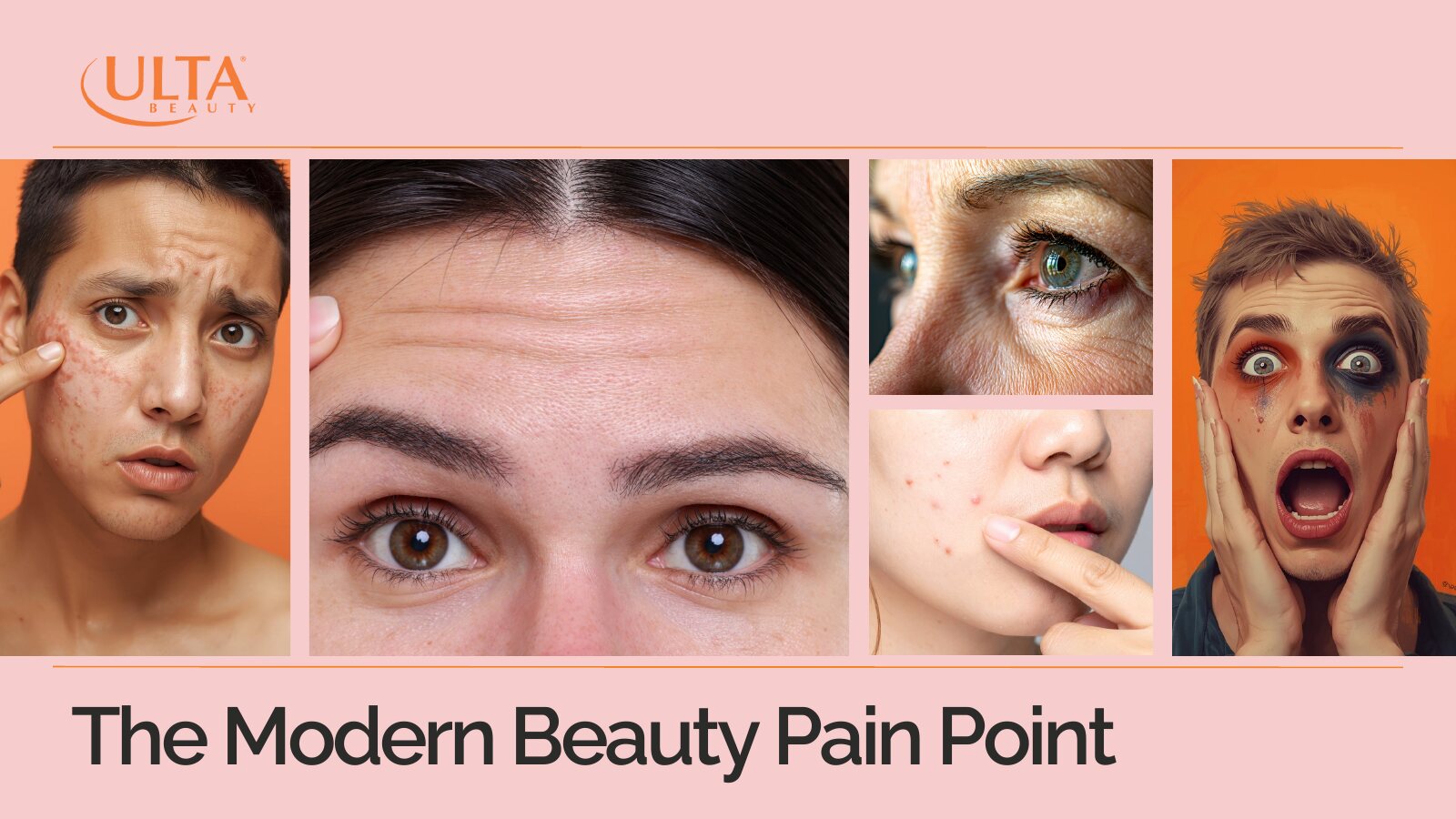
The pain point, from our Innovation Day presentation.
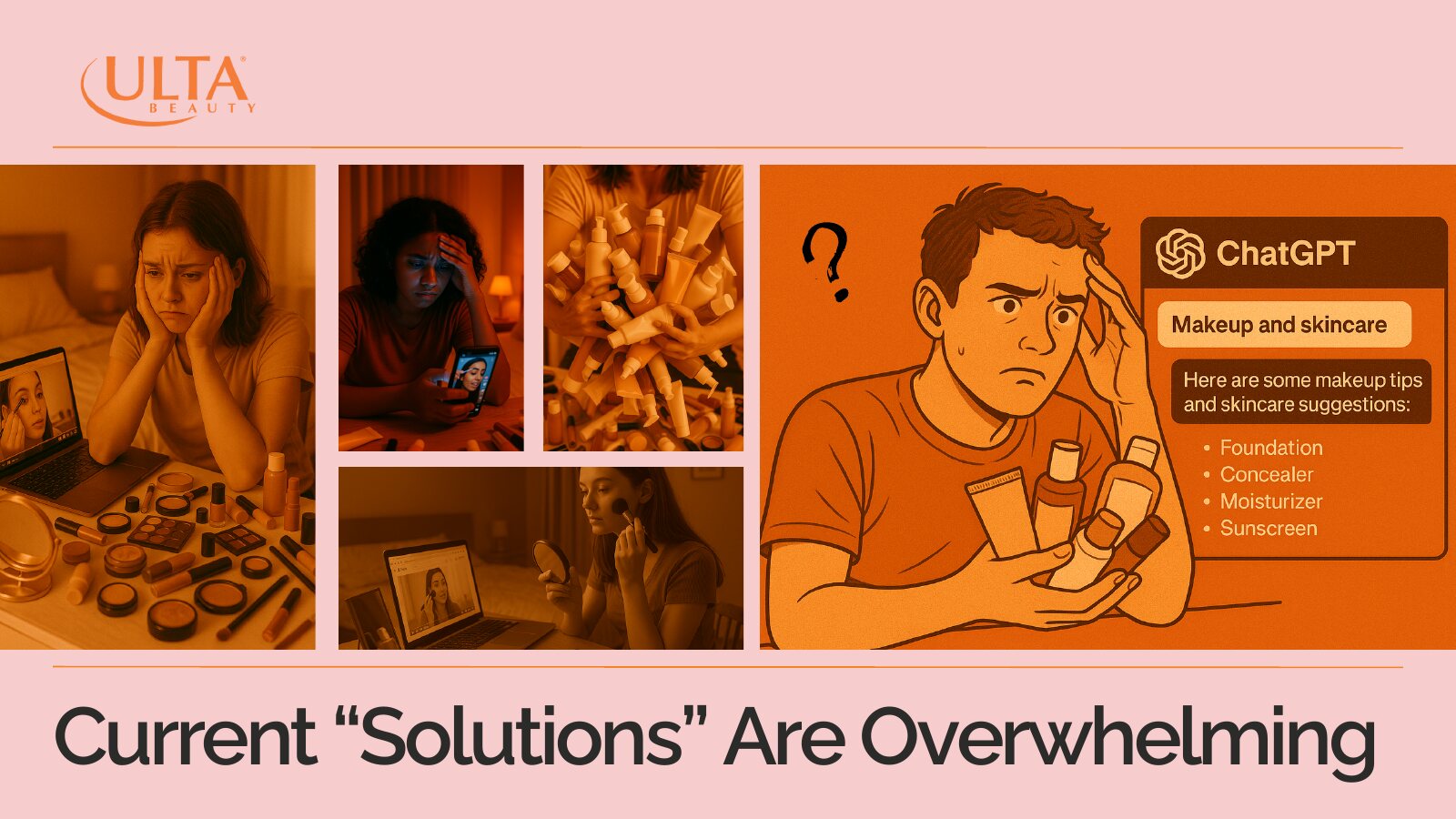
Today's options: more products, more tutorials, generic AI lists.
02 My Process
6 steps, from picking the client to the prototype. Pick one.
Step 01 · My idea
Choosing the client
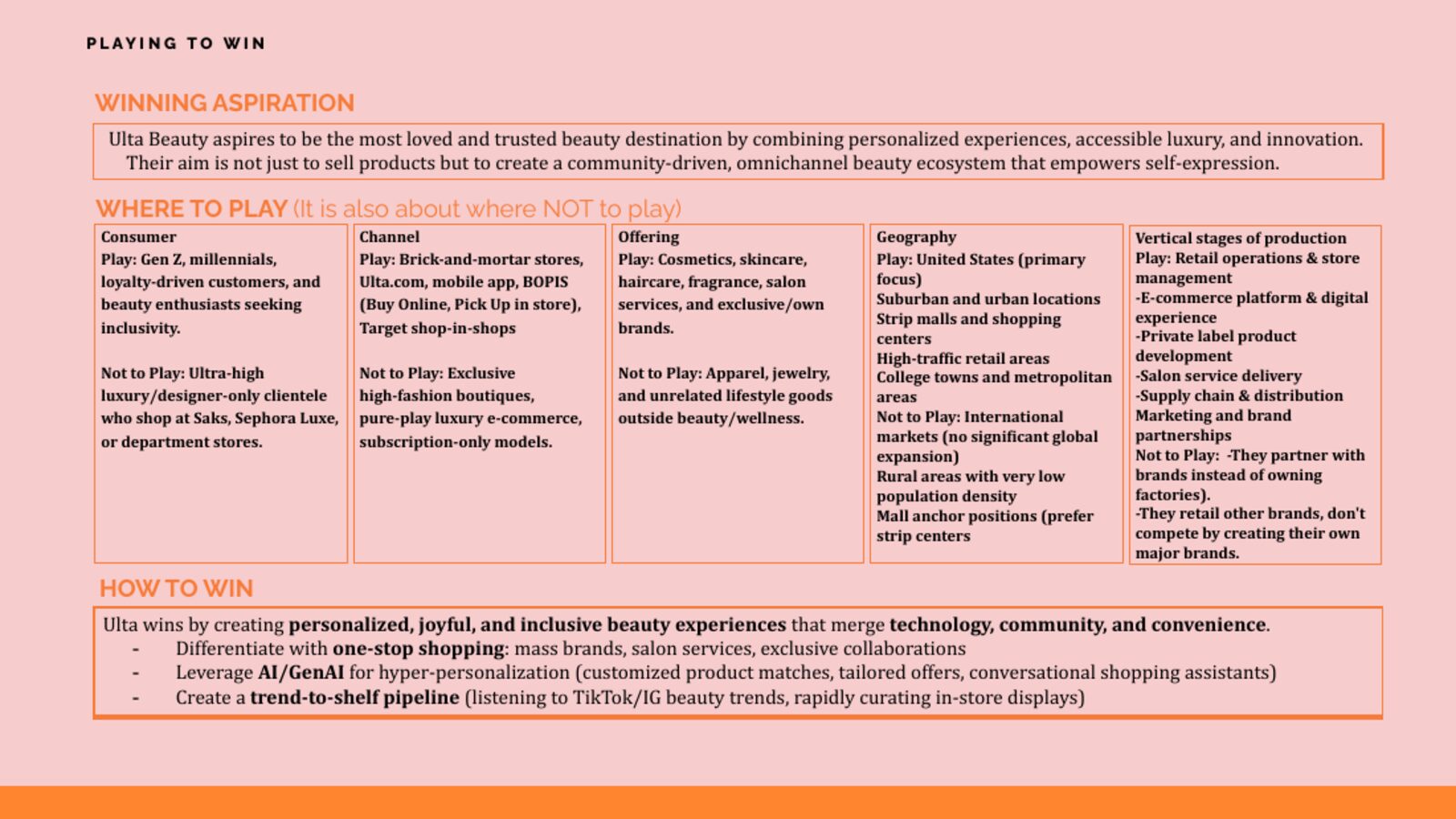
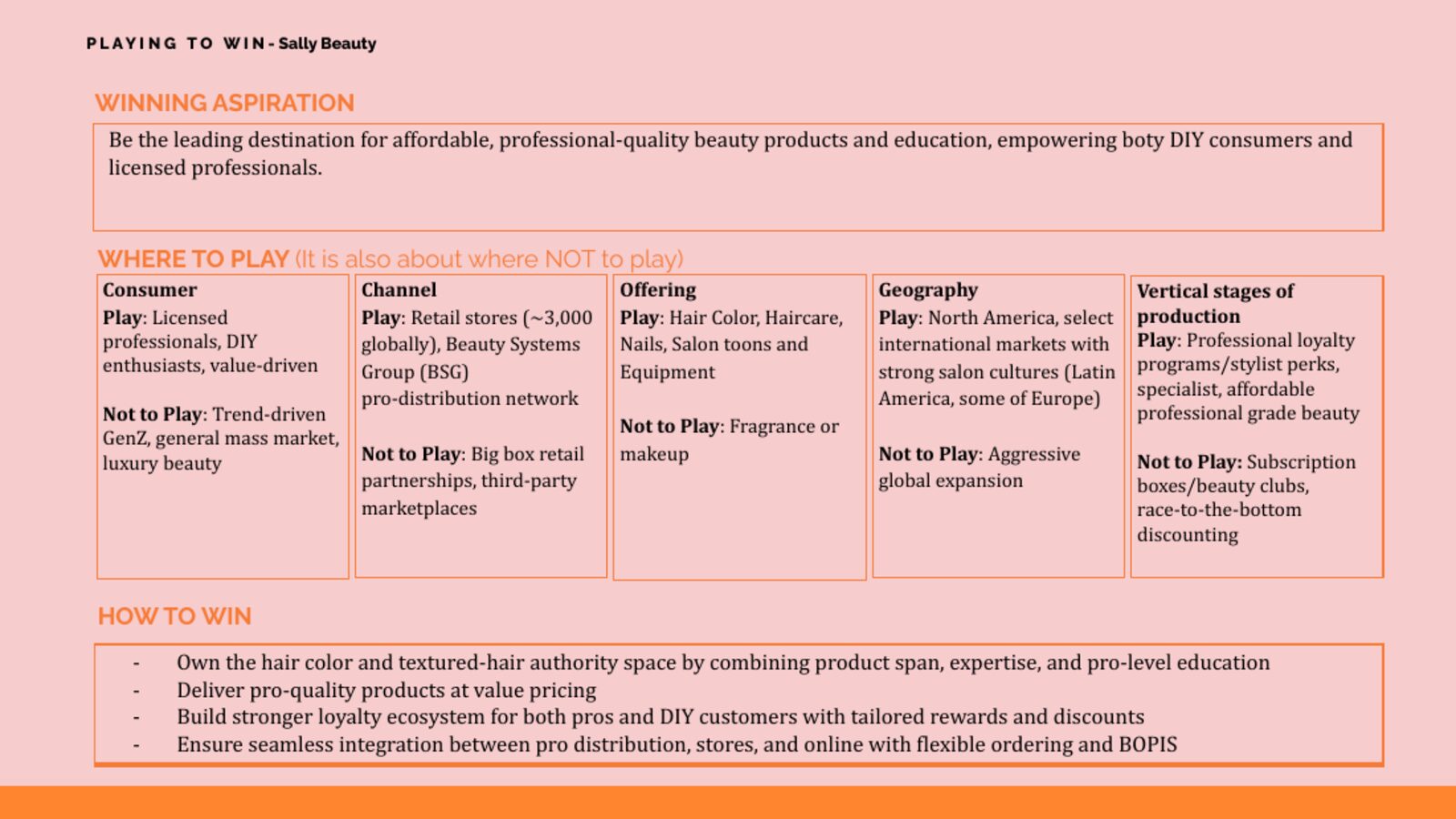
Our IPRO course asked for a generative AI strategy for a real company, and I proposed Ulta: a US beauty retailer with 1,300+ stores, a huge loyalty program and personalization as a stated goal. We mapped Ulta's strategy with the Playing to Win framework, then did the same for Sally Beauty, CVS/Walgreens and Bluemercury to see where AI could set Ulta apart. The interview later showed how big that loyalty program is: about 43–44 million members, driving about 95% of sales.
- Playing to Win
- Competitive analysis
03 The Solution
The Beauty Formula Decoder: a shopper uploads their routine or scans any product, from Ulta or anywhere else. The AI checks the ingredients for conflicts, such as retinol with vitamin C, suggests the order to apply them, and builds a bundle of products that work together, with a plain reason for every pick and a beauty advisor to confirm it.
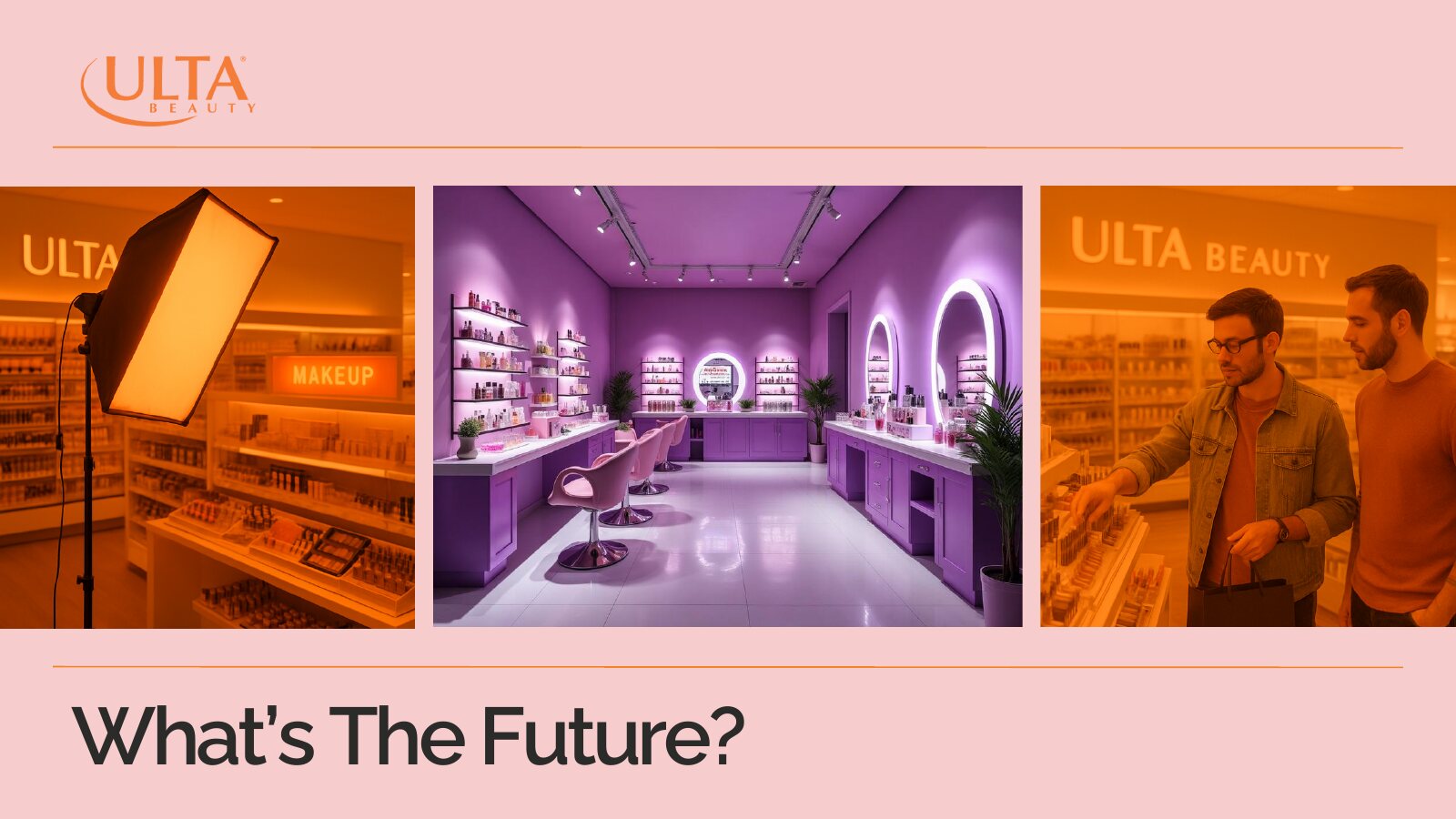
Our in-store vision: a lighting booth and consultation space for color and skin checks.
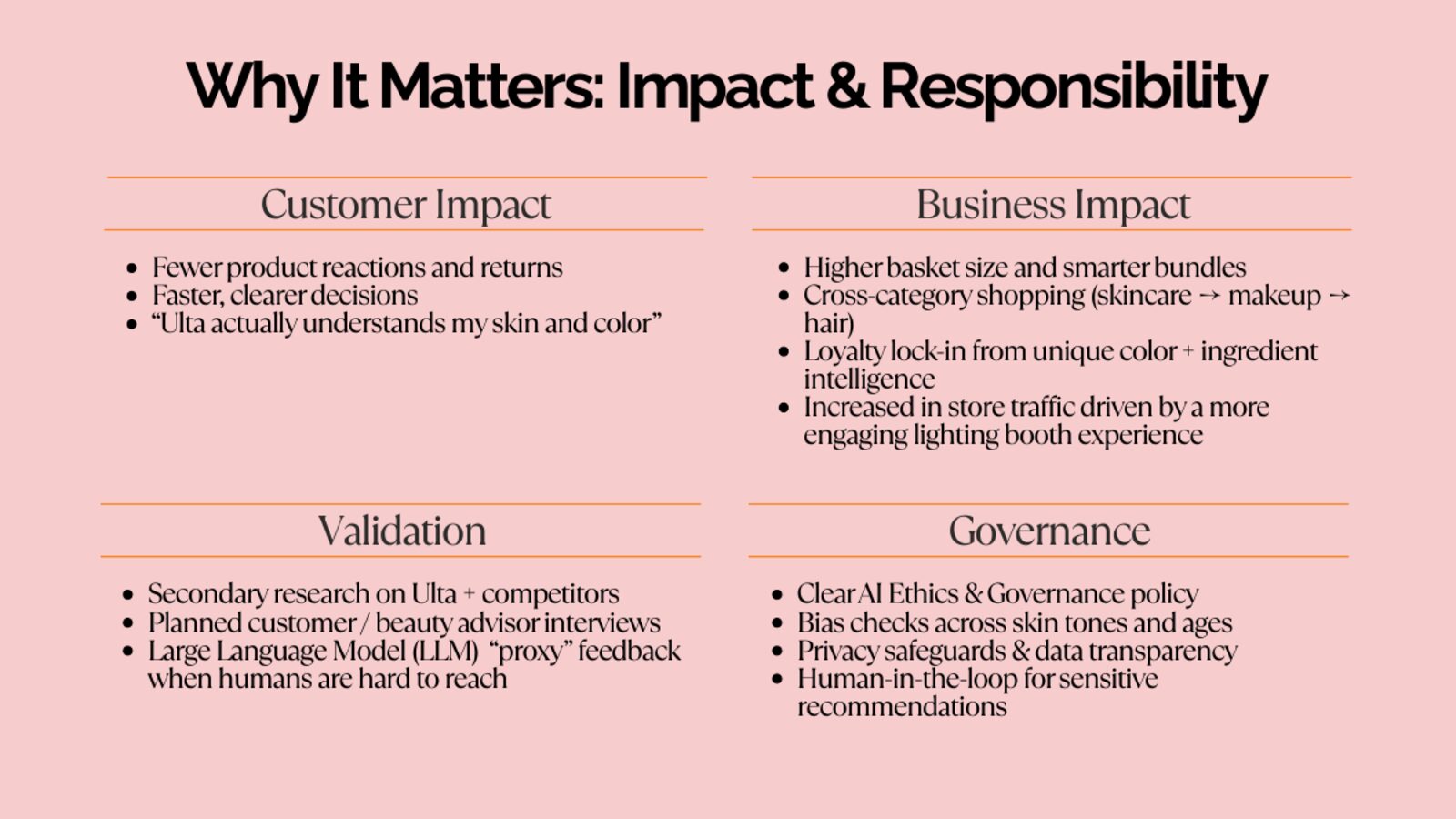
Why it matters.
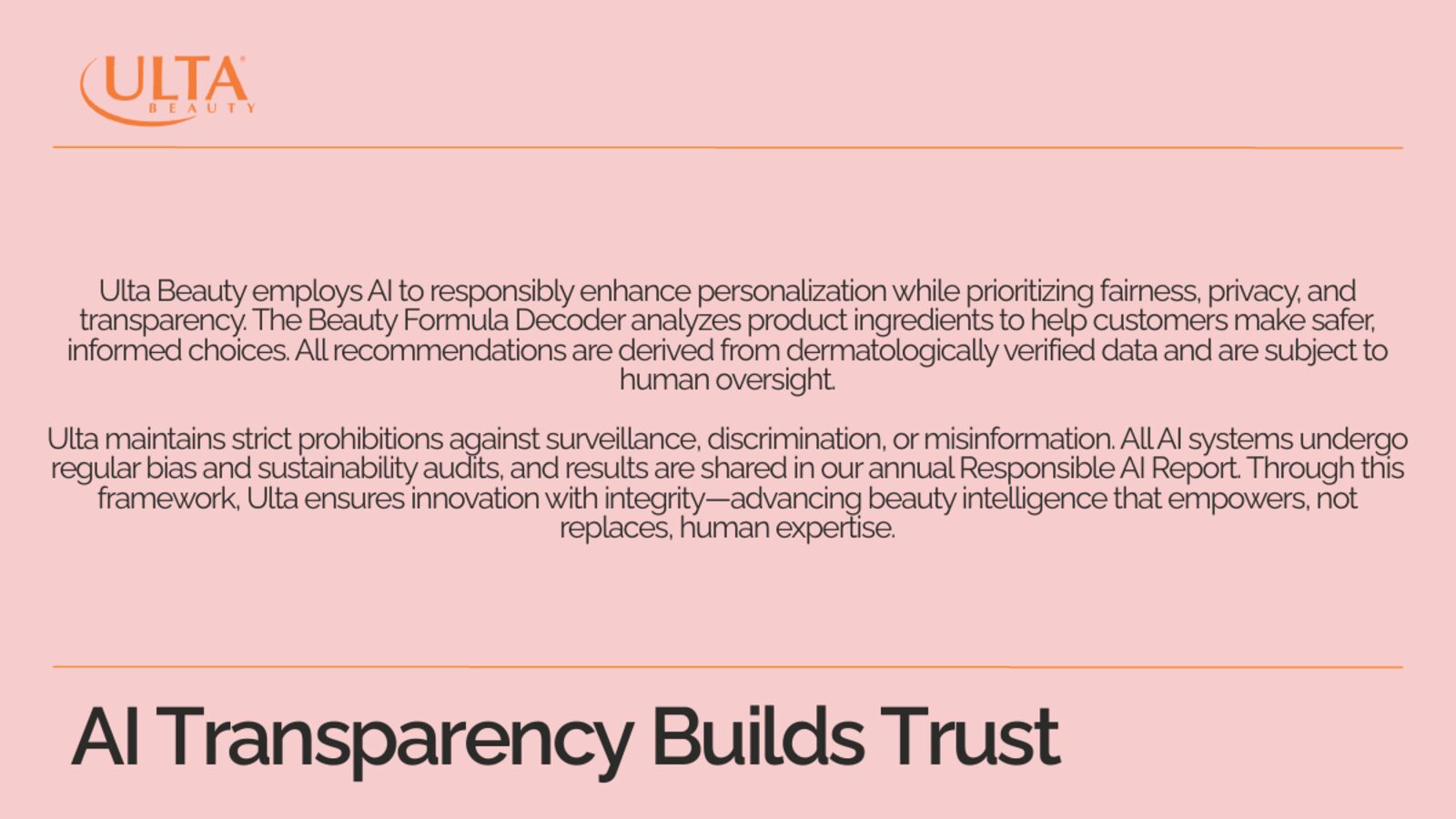
The AI disclosure shoppers would see.
04 The Outcome
In the Innovation Day auditions, our class voted our team #1 of 6, and only two teams were picked. We then presented the Decoder at Illinois Tech Innovation Day with our research deck, poster and working prototype. I wrote the content for our final presentation slides. It taught me that the strongest AI idea is the one people can trust, and that one interview can change a whole pitch.
From Innovation Day
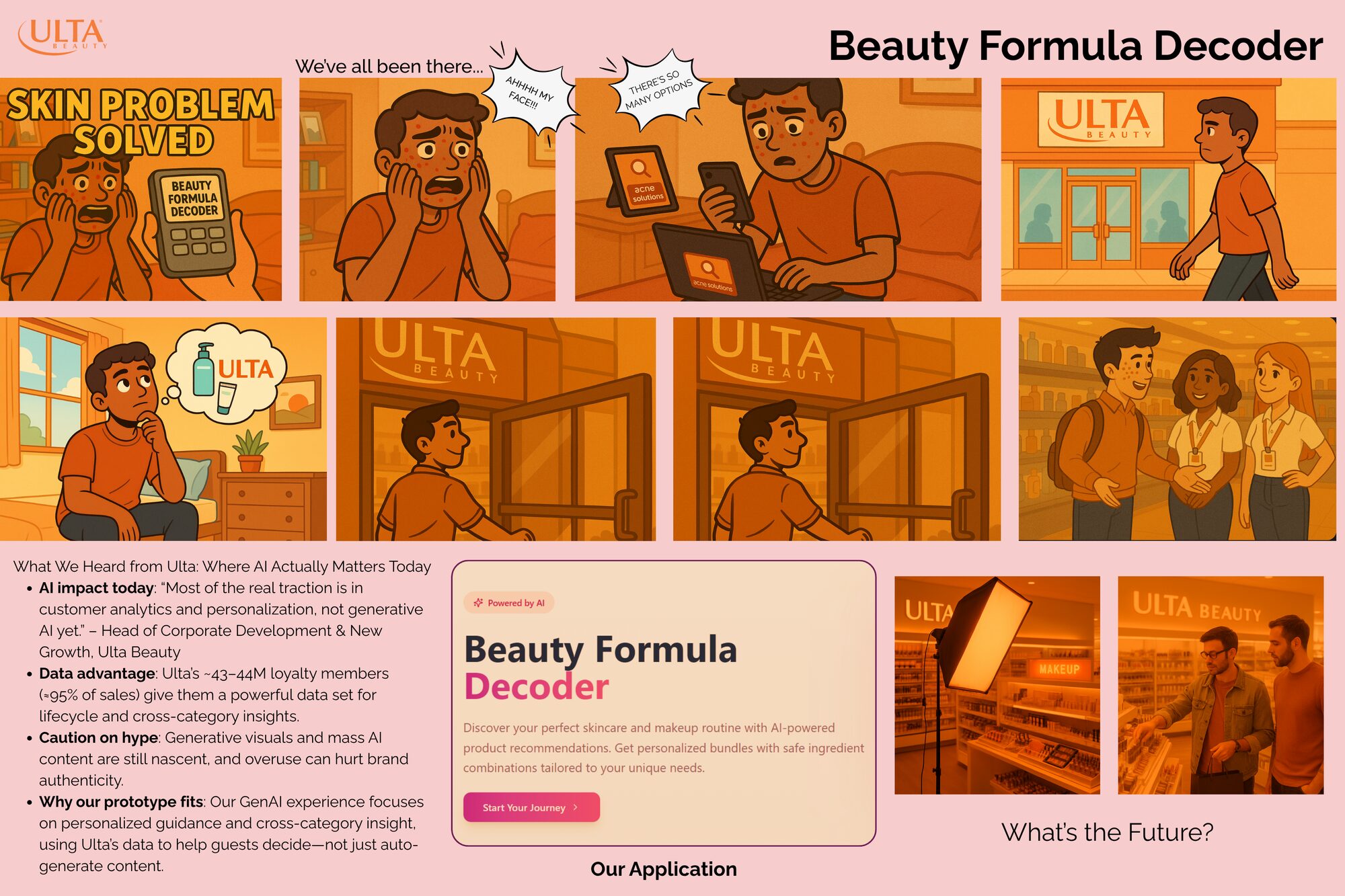
Our poster
What I'd change: Test with real shoppers and Ulta beauty advisors instead of relying on secondary research and AI stand-in feedback. Next, I'm designing a mobile version of the prototype on my own.